
The Devices Costing You $165 a Year While They're Off
The stuff in your house that is technically switched off is quietly drawing power all night, every night. Idle electronics run close to a quarter of a typical home's electricity and cost the average household around $165 a year, most of it while you sleep.

Stand in Your Living Room With the Lights Off
Try this some night after everyone's asleep. Turn off the lamps and just stand in the living room for a minute and let your eyes adjust. Once they do, you'll start counting little lights. The standby glow on the TV. The cable box, which is somehow always fully awake. The soundbar. The game console breathing slowly in its sleep mode. A phone charger with nothing plugged into it, still lit. The microwave clock. The printer that has not printed anything since March.
Every one of those is drawing power right now, doing nothing, and you are paying for all of it. The industry calls it standby power, or phantom load, or the delightful term vampire draw, and added up across a whole house it is a bigger number than almost anyone guesses. Research on this has landed on roughly $165 a year for the average household, and as much as a quarter of a home's total electricity going to devices that are, technically, off.
Off Isn't Off Anymore
The reason this snuck up on us is that the meaning of the word off changed while we weren't paying attention. Your grandmother's television was off when you turned it off. Ours are never really off. They are waiting.
A modern TV is listening for the remote, keeping its settings warm, maybe staying connected to the network so it wakes up fast. The cable box is arguably worse, because a lot of them draw nearly as much power asleep as awake, which is a small engineering scandal when you sit with it. Anything with a clock, a standby light, an instant-on feature, a "hey, wake up" voice listener, or a little external power brick that stays warm to the touch is pulling a trickle around the clock. None of it is much on its own. That's the trick of it. A couple of watts here, a few there, but running twenty-four hours a day, three hundred sixty-five days a year, across thirty or forty devices, and the trickles pool into a real bill.
The Worst Offenders Are Not the Ones You'd Guess
People assume the big draw is the big appliance, but the fridge and the furnace are actually doing work, so they don't count as waste. The phantom-load villains are the ones pretending to rest.
The cable or satellite box is usually at or near the top, precisely because it barely powers down. Game consoles are sneaky, especially the ones set to an instant-on mode that keeps them half-awake so they boot fast, a convenience that can cost more over a year than actually playing them does. Then there is the long tail that individually seems too small to bother with and collectively is half the problem: the second TV nobody watches, the old desktop and its monitor, the printer, the coffee maker with the display, the three chargers on the kitchen counter, the surround-sound receiver, the streaming stick, the smart speaker in the guest room. This is, incidentally, the quiet cost nobody factors in when they load up on connected gadgets, the same blind spot I got into with the smart home as a financial liability. Each device is a small forever-cost you signed up for at the register and never see itemized.
What Fifteen Minutes and a Power Strip Can Do
The fix here is refreshingly low-tech, and you do not need to rewire anything or buy a smart-home hub to do it. The single best tool is the humble power strip with an on-off switch, the kind that costs a few dollars.
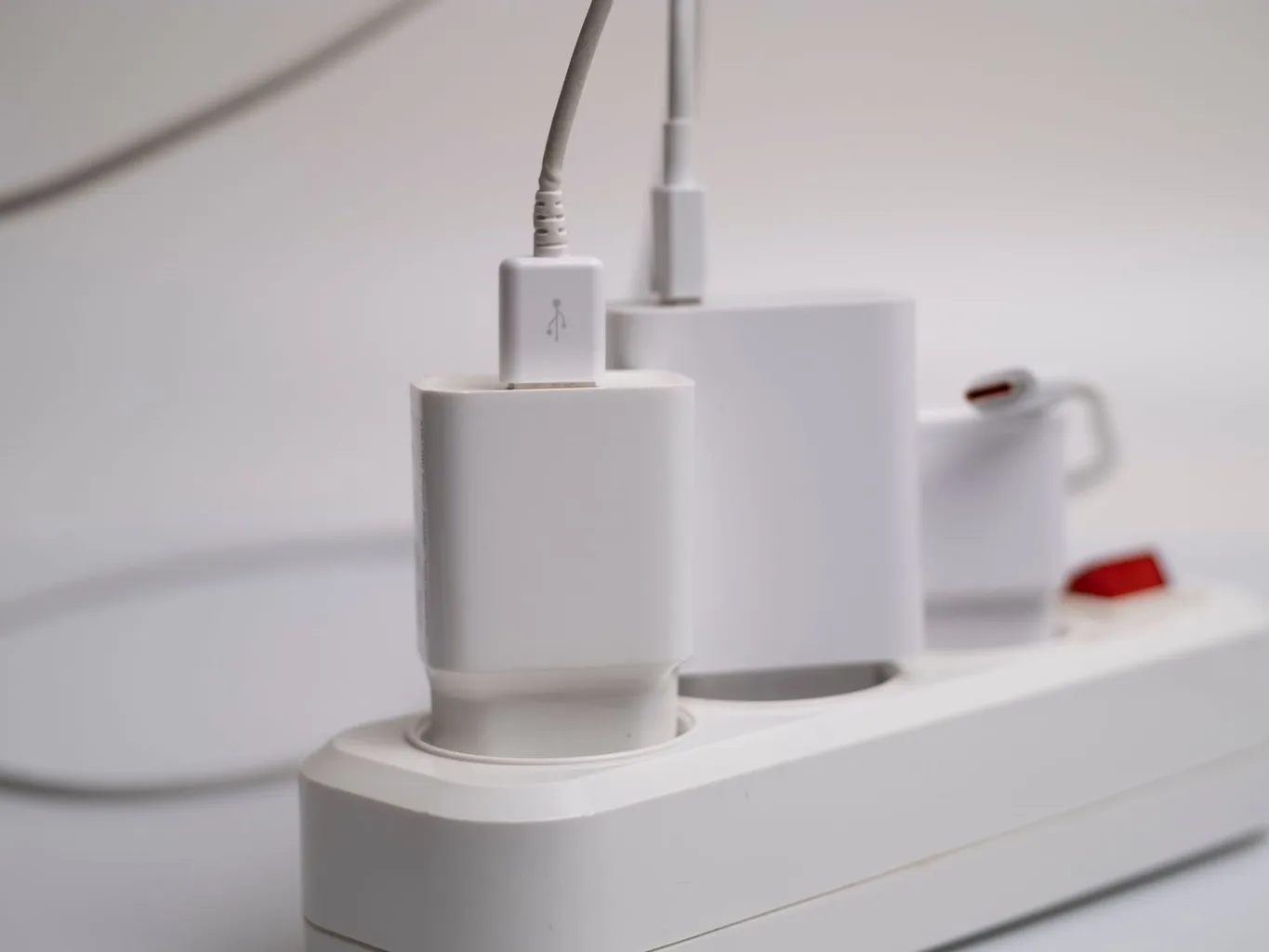
Walk the house and find the clusters, because things group naturally. The TV, the console, the soundbar, and the streaming box tend to live together, and none of them need power overnight. Put that whole cluster on one switched strip and flip it off when you go to bed, or when you leave for the day. Same for the home-office corner, the printer, the monitor, the desktop, the desk lamp, one strip, one switch, off at night. The chargers are even simpler: unplug the ones that are not charging anything, because a charger with no phone on it is pure waste, warm for no reason. If flipping switches is not going to become a habit, and for a lot of us it won't, a couple of cheap outlet timers or smart plugs can cut power to the entertainment center on a schedule, say midnight to seven, without you thinking about it at all. You are not trying to unplug the whole house. You are targeting the handful of clusters that sit there glowing all night doing nothing.
The Two Things You Should Leave Alone
A fair warning, because I don't want anyone marching off to unplug the wrong things. Leave the fridge and freezer alone, obviously, they are doing exactly what you want. And be careful with anything you actually want staying connected: a DVR set to record overnight, a home security base station, a medical device, the router if your cameras or alarm depend on it. Cutting power to those to save a few dollars is a bad trade. The goal is the stuff that is genuinely idle, the entertainment and office clusters, not the things quietly doing a job while you sleep.
Chase the Glow, Not the Thermostat
We spend a lot of energy agonizing over the thermostat, one degree up or down, when a big slice of the waste is sitting in plain sight blinking at us every night. It is not that the thermostat doesn't matter. It is that this other pile of money is so much easier to grab and almost nobody bends down to pick it up.
So do the walk. Count the little lights, group the guilty ones onto a switched strip, unplug the naked chargers, and put the entertainment center on a timer if you're honest about not flipping the switch yourself. Fifteen minutes of setup against a cost that runs every hour of every night. The house will look exactly the same by day. It'll just stop quietly billing you while you sleep.
Ready to dig into the numbers? We have side-by-side breakdowns for every product mentioned in this article.